Revolver Map

Map

Pages

Showing posts with label Psychic Abilities. Show all posts

Friday, April 4, 2014

Charles Fort's X-Men

One of Charles Fort’s books which I haven’t spent a lot of time with in the past is his final one; Wild Talents. In this work, Fort collects reports and accounts of human beings with occult or paranormal gifts or powers. If he had been so inclined, Fort might have collected these individuals together and formed his own ‘School for Gifted Youngsters’. For those not aware, the school is the headquarters and training grounds of Marvel’s X-Men. At this school, Charles Xavier (Professor X) recruits mutants, beings with incredible powers, and teaches them to harness and control their powers so that they can live in harmony with human beings.

Professor F.jpg
Though Professor X and his school may be fictional, Fort documents case after case of people in the real world who exhibit similar kinds of amazing feats. OK, so you don’t have a guy with claws coming out of his hands who also  has an amazing regenerative abilities, but you get the idea. I’ve picked out a few to highlight, though I highly suggest you read his book for yourself.  In some of the instances cited below, it might be more appropriate to label the perpetrators as “super-villains” rather than “super-heroes” as many of the persons used(abused) their “powers” for more material gains.

First up, Fort talks about a bank which was robbed. In broad daylight. In front of multiple witnesses. By an unseen, or invisible, criminal. The story is as follows;

"A bank in Blackpool was robbed, in broad daylight, on Saturday, in mysterious circumstances"—so says the London Daily Telegraph, Aug. 7, 1926. It was one of the largest establishments in town—the Blackpool branch of the Midland Bank. At noon, Saturday, while the doors were closing, an official of the Corporation Tramways Department went into the building, with a bag, which contained £800, in Treasury notes. In the presence of about twenty-five customers, he placed the bag upon a counter. Then the doorman unlocked the front door for him to go out, and then return with another amount of money, in silver, from a motor van. The bag had vanished from the counter. It was a large, leather bag. Nobody could, without making himself conspicuous, try to conceal it. Nobody wearing a maternity cloak was reported.

In the afternoon, in a side street, near the bank, the bag was found, and was taken to a police station. But the lock on it was peculiar and complicated, and the police could not open it. An official of the Tramways Department was sent for. When the Tramways man arrived with the key, no money was found in the bag. If a bag can vanish from a bank, without passing the doorman, I record no marvel in telling of money that vanished from a bag, though maybe the bag had not been opened.

Fort tells of more burglaries committed by person’s who could neither be seen nor apprehended by the police:

New York Evening Post, March 14, 1928—people in a block of houses, in the Third District of Vienna, terrorized. They were "haunted by a mysterious person," who entered houses, and stole small objects, never taking money, doing these things just to show what he could do. Then, from dusk to dawn, the police formed in a cordon around this block, and at approaches to it stationed police dogs. The disappearances of small objects, of little value, continued.

Two more strange thefts before we move on to other display’s of occult power:

Upon the afternoon of June 18, 1907, occurred one of the most sensational, insolent, contemptible, or magnificent thefts in the annals of crime, as viewed by most Englishmen; or a crime not without a little interest to Americans. On a table, on the lawn back of the grandstand, at Ascot, the Ascot Cup was upon exhibition, 13 inches high, and 6 inches in diameter; 20-carat gold; weight 68 ounces. The cup was guarded by a policeman and by a representative of the makers. The story is told, in the London Times, June 19th. Presumably all around was a crowd, kept at a distance by the policeman, though, according to the standards of the Times, in the year 1907, it was not dignified to go into details much. From what I know of the religion of the Turf, in England, I assume that there was a crowd of devotees, looking worshipfully at this ikon. It wasn't there.

About this time, there were a place and a time and a treasure that were worthy the attention of, or that were a challenge to, any magician. The place was Dublin Castle. Outside, day and night, a policeman and a soldier were on duty. Within a distance of fifty yards were the headquarters of the Dublin metropolitan police; of the Royal Irish Constabulary; the Dublin detective force; the military garrison.

It was at the time of the Irish International Exhibition, at Dublin. Upon the 10th of July, King Edward and Queen Alexandra were to arrive to visit the Exhibition. In a safe in the strong room of the Castle had been kept the jewels that were worn by the Lord Lieutenant, upon State occasions. They were a barbaric pile of bracelets, rings, and other insignia, of a value of $250,000. And of course. They had disappeared about the time of the disappearance of the Ascot Cup: sometime between June firth and July 6th.

Within the Marvel universe there are a number of super-powered persons that have fire as their source of power. So too in reality do we have a few accounts of pyrokinetics. Fort tells us about the following cases:

New Zealand Times, Dec. 9, 1886—copying from the San Francisco Bulletin, about October 14—that Willie Brough, 12 years old, who had caused excitement in the town of Turlock, Madison Co., Cal., by setting things afire, "by his glance," had been expelled from the Turlock school, because of his freaks.

His parents had cast him off, believing him to be possessed by a devil, but a farmer had taken him in, and had sent him to school. "On the first day, there were five fires in the school: one in the center of the ceiling, one in the teacher's desk, one in her wardrobe, and two on the wall. The boy discovered all, and cried from fright. The trustees met and expelled him, that night." For another account, see the New York Herald, Oct. 16, 1886.

Another:

New York Herald, Jan. 6, 1895—fires in the home of Adam Colwell, 84 Guernsey Street, Greenpoint, Brooklyn—that, in 20 hours, preceding noon, January 5th, when Colwell's frame house burned down, there had been many fires. Policemen had been sent to investigate. They had seen furniture burst into flames. Policemen and firemen had reported that the fires were of unknown origin. The Fire Marshal said: "It might be thought that the child Rhoda started two of the fires, but she cannot be considered guilty of the others, as she was being questioned, when some of them began. I do not want to be quoted as a believer in the supernatural, but I have no explanation to offer, as to the cause of the fires, or of the throwing around of the furniture."
….
Captain Rhoades, of the Greenpoint Precinct, said: "The people we arrested had nothing to do with the strange fires. The more I look into it, the deeper the mystery. So far I can attribute it to no other cause than a supernatural agency. Why, the fires broke out under the very noses of the men I sent to investigate."

Sergeant Dunn—"There were things that happened before my eyes that I did not believe were possible."


We shall end our tour of Fort’s X-Men with his musings on the ‘poltergeist’ phenomena and how it may actually represent a kind of occult power or a re-imagining of the old stories of “witchcraft”. Fort tells us:

My general expression is against the existence of poltergeists as spirits—but that the doings are the phenomena of undeveloped magicians, mostly youngsters, who have no awareness of their powers as their own—or, in the cases of mischievous, or malicious, persecutions, are more or less consciously directed influences by enemies—or that, in this aspect, "poltergeist disturbances" are witchcraft under a new name.

He then provides us with some accounts which seem to suggest that witchcraft may still be alive and well:

New York newspapers reported three cases, close together, in the year 1927. New York Herald Tribune, Aug. 12, 1927—Fred Koett and his wife compelled to move from their home, near Ellenwood, Kansas. For months this house had been bewitched—pictures turned to the wall—other objects moving about—their pet dog stabbed with a pitchfork, by an invisible.

New York Herald Tribune, Sept. 12, 1927—Frank Decker's barn, near Fredon, N. J., destroyed by fire. For five years there had been unaccountable noises, opening and shutting doors, and pictures on walls swinging back and forth.

Home News (Bronx), Nov. 27, 1927—belief of William Blair, County Tyrone, Ireland, that his cattle were bewitched. He accused a neighbor, Isabella Hazelton, of being a witch—"witch" sued him for slander—£5 and costs.

And lastly:

An elderly woman, Mme. Blerotti, had called upon the Magistrate of the Ste. Marguerite district of Paris, and had told him that, at the risk of being thought a madwoman, she had a complaint to make against somebody unknown. She lived in a flat, in the Rue Montreuil, with her son and her brother. Every time she entered the flat, she was compelled by some unseen force to walk on her hands, with her legs in the air.

The woman was detained by the magistrate, who sent a policeman to the address given. The policeman returned with Mme. Blerotti's son, a clerk, aged 27. "What my mother has told you, is true," he said. "I do not pretend to explain it. I only know that when my mother, my uncle, and myself enter the flat, we are immediately impelled to walk on our hands." M. Paul Reiss, aged fifty, the third occupant of the flat, was sent for.

"It is perfectly true," he said. "Everytime I go in, I am irresistibly impelled to walk around on my hands." The concierge of the house was brought to the magistrate. "To tell the truth," he said, "I thought that my tenants had gone mad, but as soon as I entered the rooms occupied by them, I found myself on all fours, endeavoring to throw my feet in the air."

The magistrate concluded that here was an unknown malady. He ordered that the apartments should be disinfected.

As someone who grew up on comic books and various other forms of fantasy, it doesn’t take much to convince me that some people, consciously or unconsciously, have access to abilities or powers beyond what the rest of us have. Could there be more prosaic explanations for these accounts, possibly. I certainly don’t rule it out. But the sheer volume of the reports, many which have similar circumstances, seem to suggest that something else is going on. Perhaps these powers or abilities are vestigial remains from pre-history, as Fort has suggested in Lo!. Maybe they represent the next step in gradual human evolution, not unlike the X-Men comics.

Monday, March 31, 2014

Thoughtography

Probably because I’m a huge fan of Spiderman, I was interested in photography from an early age. At one point I had even considered a career in photography, until I realized how bad I am at composition and how much talent is required to be a photographer. In high school I took a photography class and really enjoyed it, but it was obvious that it was not for me. Coincidentally within the realm of the paranormal there is a different kind of photography which I was recently reminded of; (real talk it was because I spent the weekend marathoning The X-Files) Psychic Photography or ‘Thoughtography’.

The origins of this particular psychic expression seems to be with a Japanese Psychologist named Tomokichi Fukurai. Fukurai was an assistant professor of psychology at Tokyo University around the turn of the 20th century, around 1910 or so. He was the first to recognize this phenomenon which he called nesha, spirit photography. Fukurai’s studies into psychic areas were occurring almost simultaneously as the introduction of Western Spiritualism ideas into Japan by Wasaburo(u) Asano.  Asano created the Shinrei-Kagaku-Kenkyujyo (Japanese Society for Spiritual Science Research) in 1923, which is apparently still in existence today, although confirming that hasn’t been easy.

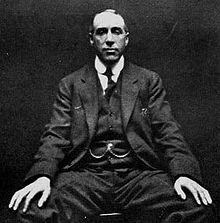
fukurai.jpg                                                      mifunenew.jpg

Fukurai started out by studying specific mediums and psychics. One in particular was Chizuko Mifune, pictured above. Mifune claimed to have gained her powers at the age of 25 after much breathing and meditative practices. Sadly, Mifune who later took her own life following a demonstration of her ‘powers’ which led to her being discredited. She ingested poison and committed suicide. Of particular interest to today’s post was a psychic by the name of Ikuko Nagao. According to Dr. Fukurai, Nagao was able to transmit her thoughts and project them onto film. This was the start of what was to become “thoughtography”. It wasn’t long before Nagao was also accused of being fraudulent and she too later died.

The third time apparently being the charm for Dr. Fukurai, he met with Sadako Takahashi who was also able to produce thoughtography. With the time spent studying Takahashi, Dr. Fukurai published Toshi to Nensha which was translated and published into English as Clairvoyance and Thoughtography. Critics notwithstanding, Dr. Fukurai was apparently able to have some success in the area of Thoughtography. ALthough not much of it is available on the internet, I was able to track down at least photo which is attributable, allegedly, to Dr. Fukurai’s nensha experiments.


nenshaphoto.jpg        fortean_times_4975_12.jpg

Dr. Fukurai wasn’t the only person who did work in this area, however. A clinical professor of psychiatry at the University of Colorado Medical school, and a charter member of the Parapsychological Association, by the name of Julie Eisenburd wrote numerous articles on psychiatry and psychoanalysis based on studies he did relating to telepathy. In the 1960’s , Eisenburd discovered a unemployed bell hop by the name of Theodore Serios. Serios, who is better known as ‘Ted Serios’, had an unusual gift. By concentrating on a polaroid camera, Serios claimed that he could project his thoughts on to the undeveloped film. Serios was apparently engaging in thoughtography just as Takahashi had some 30 years before.

images

As with most paranormal or psychic phenomenon, the thoughtographs produced by Serios didn’t always display something. More often than not they were either completely black, as though they had never been developed, or completely white, as if they were overexposed. On occasion however, strange fuzzy like images could be seen to have appeared on the film. As with Takahashi and Nagao before him, the source of these images were allegedly the mind of Serios.

Probably not surprisingly, skeptics and photographers alike believe that Serios and Eisenburd collaborated together on hoaxing all of the photographs that Serios produced. The claim was that Serios would palm materials that would be exposed onto the photographs and would result in the images which were alleged to be thought projections. Eisenburd seemed to remain convinced of the ability he believed Serios had. He would eventually write a book all about Serios titled The World of Ted Serios: "Thoughtographic" Studies of an Extraordinary Mind.

photo_10247_carousel.jpg


What are we to make of these claims? I for one remain skeptical, but as always open-minded. Though I couldn’t offer a mechanism which would explain how thoughtography could work, I’m not ready to rule it out either. The evidence which Takahasi, Nagao, and Serios produced isn’t exactly the most concrete, but who can say what we could learn in the future? Perhaps this is an area worth investigating further. I’m also left curious if anyone has attempted to use digital cameras for thougthographic experimentation? In the end, I will leave to the reader to decide for themselves how the feel about these claims. As for myself, I’m going to start trying to figure out how I can take a digital thoughtographic selfie.

Wednesday, March 26, 2014

Enfield Poltergeist

Stories of poltergeist activity have been an interest of mine, perhaps more so than other kinds of alleged “hauntings”. This stems mostly from some of the evident peculiarities and similarities amongst the cases. This is just a short review, but the phenomenon almost always begins as a tapping or knocking sound that is heard. This is where we get the term from anyway, it roughly translates from German into English as ‘noisy-ghost or spirit’. The phenomenon is usually focused on a pubescent child in the home, almost exclusively a girl. This fact has lead some Parapsychologists to theorize that the Poltergeist Phenomenon may actually originate from the mind of the child in the form of recurrent spontaneous psychokinesis.

The idea is that perhaps as these girls are undergoing the normal process of development, the stress and/or hormones causes the girls to unconsciously act out in less than normal ways (i.e. psychic). Others believe that these stories represent actual entities which are external to the child that seems to be the focus of the phenomenon, perhaps because they are being targeted for nefarious reasons no doubt.

For today’s post I wanted to focus on a very specific reported case of Poltergeist activity which is a very interesting case study in possible genuine phenomenon which occurred alongside trickery or at least an exaggeration of the reported phenomenon by the witnesses. Most of the information that I’ve listed below comes from Colin Wilson’s Poltergeist which, as the name suggests, The reports of what happened here began over 30yrs ago on an August night in the year 1977 in Enfield, England.

40yr-old divorcee Margaret Hodgson lived in a rented home with her four children; Rose aged thirteen, Janet aged eleven, Pete aged ten, and Jimmy aged seven. Pete and Janet shared a room and it was this room that would be the site of much of the alleged phenomena. That night, after Pete and Janet had gone to bed their beds began to move in a strange fashion. They called their mother in, she thought that they were messing around and told them to go back to bed.

Picking up the story Wilson notes (as a note Wilson refers to the family as Harper and not Hodgson for reasons I’m not aware of):

The next evening, the children heard a shuffling noise, like a chair moving. Mrs. Harper came in and asked them to be quiet. The room all seemed to be perfectly normal. But when she switched off the light, she also heard the shuffling noise. It sounded like someone shuffling across the room in slippers.

Then there were four loud, clear knocks. And when Mrs. Harper put the light on again, she saw the heavy chest of drawers moving on its own. It slid a distance of about eighteen inches across the floor. She pushed it back. It slid back again.

At this point Hodgson decided to run to a neighbor named Vic Nottingham. Nottingham and his son ran inside the house and searched around, I assume for some kind of explanation for what the Hodgson’s were experiencing.  As the Nottinghams were inside the house, the knocking began again. By this time, Hodgson must have had enough and decided to call the police.

Wilson writes:

They sent for the police. When the lights were switched of, the knocking started. Then, in the light from the kitchen, everyone saw a chair that was wobbling into motion. It slid toward the kitchen for three or four feet.

Evidently they should have called the Ghostbuster (man that was bad) because the police leave seemingly without being able to offer any kind of explanation or solution for the Hodgsons. The family slept that night in the living room.

The following day all was seemingly quiet until night fell. Wilson tells us:

Then the poltergeist began throwing things. Marbles and Lego bricks came zinging through the air as if shot from a catapult. When someone picked up one of the marbles, it was found to be burning hot.

Eventually the Society for Psychical Research (SPR) was to get involved with the case. Specifically, Guy Playfair would come in on the case and spend the next two-years investigating this case. This case has a lot of media attached to it. Below is one of the more (in)famous photos from the case that purport to show one of the girls, Janet, being thrown around the room by the alleged entity.


EnfieldPoltergeist2.jpg


I’m not the first person to suggest this, but to me at first glance this photo appear to show girls jumping around on their bed. That doesn’t mean it’s what’s actually happening, but it certainly looks that way. In the end Playfair was to write a book recounting his version of the events which took place at the Enfield house entitled This House is Haunted. Playfair concludes the following about the case:

When Mr. and Mrs. Harper were divorced, an atmosphere of tension built up among the children and their mother, just at the time when the two girls were approaching physical maturity. They were a very energetic pair to start with, both of them school sports champions, but even they could not use up the tremendous energy they were generating. So a number of entities came in and helped themselves to it.

So many years later, and being so removed from the events, it’s hard to say what may have actually occurred here. Playfair seemed to believe that some genuine paranormal events happened in this case, but at the same time it’s known that the girls were found to be faking some of the events. If there was real weirdness happening here, why did the girls fake some of the experiences? Who knows? Could it be that the girls liked the attention they were receiving, especially from the male investigators as a replacement for their father’s attention and didn’t want for it to end?

If you want to learn more about this case, there have been a plethora of documentaries made about it. Most of which seem to be available on youtube. And if that’s not enough for you, because Ed and Lorraine Warren somehow got involved in the case at some point, you can look forward to seeing a version of the events on the big screen in the form of The Conjuring 2 coming sometime in 2015.

Friday, August 3, 2012

Tulpas, Tibet, and the Conjuration of Philip

When it comes to possible explanations for fortean or paranormal phenomena, I always find myself fascinated by the concept of the tulpa. Tulpa is a Tibetan word that is typically rendered into English as 'thoughtform'. The idea is that someone can create from their thoughts an actually entity or phantom and give it life. Alexandra David-Neel is credited with bringing the term and concept to the Western world in her 1929 book Magic and Mystery in Tibet. David-Neel had traveled extensively around the globe and was one of the first Westerners to be allowed entrance into Tibet and their religion and culture. David-Neel relates a lot of information to the reader about Tulpas in the Tibetan belief. According to David-Neel:

A Bodhisattva [David-Neel says this is a person that has attained a spiritual perfection that places them just below the Buddha] is the basis of countless magic forms. By the power generated in a state of perfect concentration of mind he may, at one and the same time, show a phantom (tulpa) of himself in thousands of millions of worlds. He may create not only human forms, but any forms he chooses....” (pg 121)

David-Neel continues by saying:

The power of producing magic formations, tulkus or less lasting and materialized tulpas, does not, however, belong exclusively to such mystic exalted beings. Any human, divine or demoniac being may be possessed of it. The only difference comes from the degree of power, and this depends on the strength of the concentration and the quality of the mind itself” (pg 121)

With this in mind, I wish to take a look at a relatively modern example of the creation of a ghost named Philip. During the 1970s a group from the Toronto Society for Psychical Research, along with a Dr. A.R.G. Owen (who was a mathematician) meet in order to see if they could, in essence, create a ghost. The group was comprised of Dr. Owen, his wife, a former chairperson of Mensa, an industrial designer, an accountant, a housewife, a bookkeeper and a sociology student. Additionally a psychologist by the name of Dr. Joel Whitton would also attend some of their experiments. The original idea was that this group of people could create a ghost seemingly by meditating on the idea of him including the history of the ghost. They would then attempt to make contact with this discarnate entity through séances and gain information from it.

Here is a part of the biography for the spirit the group created in order to flesh out “Philip Aylesford”:

Philip was an aristocratic Englishman, living in the middle 1600s at the time of Oliver Cromwell. He had been a supporter of the King, and was a Catholic. He was married to a beautiful but cold and frigid wife, Dorothea, the daughter of a neighboring nobleman.

One day when out riding on the boundaries of his estates Philip came across a gypsy encampment and saw there a beautiful dark-eyed girl raven-haired gypsy girl, Margo, and fell instantly in love with her. 

He brought her back secretly to live in the gatehouse, near the stables of Diddington Manor - his family home.

For some time he kept his love-nest secret, but eventually Dorothea, realizing he was keeping someone else there, found Margo, and accused her of witchcraft and stealing her husband. 

Philip was too scared of losing his reputation and his possessions to protest at the trial of Margo, and she was convicted of witchcraft and burned at the stake.

Philip was subsequently stricken with remorse that he had not tried to defend Margo and used to pace the battlements of Diddington in despair. 

Finally, one morning his body was found at the bottom of the battlements, whence he had cast himself in a fit of agony and remorse.
One member of the group even sketched Philip's portrait
With this back story firmly in mind, the group meet weekly in order to attempt to communicate with “Philip”. As a part of their weekly meetings the group would come together and meditate on both the image of Philip and also his history. The group did this for about a year with no positive results. Some members of the group did claim during this time that they were able to sense a presence, but apparently nothing that was verifiable. The group was quite determined and rather than let the last year be for waste they decided to change up the tactics a bit. In order to have better results with conjuring Philip, the group began to replicate the séances of old.

Candle light, sitting around a table, soft music playing, the whole thing. They even had pictures of castles like the one Philip would have lived in, had he ever actually lived that is. This new method seemed to do the trick. During one of the group's séances, they began to receive communication from an entity. Through a series of rappings (reminiscent of the early Spiritualism movement) the group was able to determine that they were finally talking with Philip. The entity revealed this to the group through a series of raps. Speaking through raps, Philip continued to display his own unique attitude. This was discovered by how long Philip would pause in between answering the questions which the researchers posed to him.

The group never questioned that the entity they were in communication with was Philip because of it's lack of knowledge on many topics. It seems that Philip only knew the answers to questions that someone in the group knew the answer to. If they would ask him a question that the group didn't know the answer to he would be unable to answer. While the Q & A portion of Philip's ability might have been lacking, he completely made up for this shortcoming with his very clear psychokinetic abilities. Overtime as the séances continued, the group discovered that Philip was able to move the rapping table. Often, Philip would even cause the table to rush over to people that were late to the weekly meetings.

The height of the Philip saga came when the group set out to perform one of their weekly séances in front of an audience made up of 50 people or so. Additionally a TV film crew was brought in to record the séance as part of a documentary. Unlike most paranormal phenomena, Philip actually seemed to enjoy the spotlight. The rappings and psychokinetic feats were on display for all the audience to see. At one point during the séance the group was even able to get the entire table to levitate a few inches off of the ground. Sadly, because of the dim lighting that was required as a part of the séance the film crew was unable to record this for posterity. Only a part of the documentary seems to be online and you can check out the few minutes of it that exist here.

Although the groups main objective of having Philip physically materialize (not unlike Rosalie), they were overall satisfied with the results of their experiments. So much so that after their success with Philip, the Toronto Society for Psychical Research went on to conjure other ghosts with similar apparent success. In one instance, using a different group of people, they were able to conjure a new spirit which was called “Lilith”. A few other groups are supposed to have been able to successfully recreate this experiment as well, but finding information on those incidents is rather difficult.

At the end of the day it's hard to say what it was that was actually occurring in this situation. It certainly seems to fit in with the concept of the tulpa, especially as explained by David-Neel in her classic work on the topic. I only wish that more of the documentary existed so that it could be scene. Ostensibly, if this experiment was truly as easy as the group proclaimed I suppose that anyone could conceivably do this at home. Before you do decide to go through with this and conjure your own ghost, I feel I must leave you with a parting warning from David-Neel:

.....the practice is considered as fraught with danger for everyone who …. is not aware of the nature of the psychic forces at work in the process. Once the tulpa is endowed with enough vitality to be capable of playing the part of a real being, it tends to free itself from its maker's control.....Sometimes the phantom becomes a rebellious son and one hears of uncanny struggles that have taken place between magicians and their creatures, the former being severely hurt or even killed by the latter.” (pg 313)

Sources and further reading:


Conjuring up Philip by Iris Owen (part of the original group that summoned Philip)

Monday, July 30, 2012

Harry Price and the Materialization of Rosalie

In parapsychological research perhaps no phenomenon is more elusive, and most highly debated, than the actual manifestation of a ghost or spirit. While reading through my recently acquired copy of Brad Steiger's Real Ghosts, Restless Spirits, and Haunted Places I came across a fascinating account of a materialization of a child's ghost that was witnessed and investigated by famed British author and Psychic researcher Harry Price. Price wrote about the events that led up to his coming into contact with Rosalie in his 1939 book Fifty years of Psychical Research. The story that follows is interesting but, like most of the paranormal, is highly controversial. I'll leave it for you to decide what happened that night. Steiger tells us the following:

On December 8, 1937, Harry Price had just concluded a radio broadcast regarding psychic phenomena when a listener contacted him with an interesting revelation. Price was informed that the listener regularly participates in a family séance that was held every Wednesday evening, at which the family materialized the spirit of a child. (pg 234)

Harry Price, Psychical Researcher
Price was offered the opportunity to come and witness one of these weekly investigations on some conditions; according to Price in Fifty years in Psychical Research:

Of course, there were conditions, which I anticipated. But I was genuinely astonished at the simple rules to which I was asked to adhere. In the first place, if I accepted the invitation to attend a séance, I was to promise not to reveal the identity of any of the sitters, or the locality where the séance was held. I could write an account of the séance giving my candid views of it, provided I mentioned no names.

If I were impressed with the proceedings, I was 'not to seek a scientific inquiry', as the mother of 'Rosalie,' who attended each sitting, was 'terrified that her girl might be frightened away.' These Wednesday meetings were in the nature of a sacred communion with the spirit of her daughter, and would be maintained as such.

I was not to bring to the séance any light (such as a torch); I was not to speak to or touch the materialization without permission, and I was not to do anything, or make any experiment, without the sitters' consent. I would not be asked to sign any document embodying these arrangements: it was to be a 'gentlemen's agreement.'

As a part of the conditions, Price would be allowed to fully search the room and home where the séance was to be held. In his own words Price says:

I would be allowed full control of the room and the sitters up to the beginning of the séance. I could search the house from top to bottom, seal all external windows and doors, search the séance room (the drawing-room), all doors and windows of which I could lock and seal,

I could move - or remove - any furniture, ornaments, etc., from the séance room which I thought fit, I could control the room to the extent of sprinkling powdered starch or other substance round doors or windows, or place electrical contacts there (she admitted that she had gathered that this was what I did, from my broadcast from the 'haunted house'),

I could search the sitters or any person in the house immediately before or after the séance.

Price agreed and set a date in which to come see the events of the séance firsthand. When he arrived at the location, Price was given a little more background information about the child's spirit that was going to be manifested. Apparently the child was a little girl named Rosalie. Rosalie had died in 1920 from a case of diphtheria. In his notes, Price simply referred to the mother as a 'Madame Z'. In addition to the background on the child, Price was given some information detailing the circumstances by which the weekly séance began. Price notes:

In the spring of 1925 - according to my hostess - Madame Z. was awakened during the night by the sound of her dead girl's voice crying 'mother.' This occurred so frequently that Madame Z. got into the habit of lying awake at night, waiting for the 'voice.' Gradually, she thought she could see (in the dark) the dim outline of 'Rosalie' and hear her footsteps in the room. Finally, the mother declared, one night she put her arm out of bed and her hand was clasped by that of her little girl.

The séance began sometime after dinner. However it wasn't until around 10 pm that something started to happen. Madame Z suddenly said that she felt the presence of Rosalie that she was here. Rosalie's mother began weeping and sobbing. Price, meanwhile, relates that he heard nor saw anything though he did report smelling something. In fact Price says:

At the same moment I, too, realized that there was something quite close to me. I neither heard nor saw anything, but the sensation was an olfactory one - I seemed to smell something that was not there previously. It was a strange, not unpleasant smell.

Smells aside, Price seemed to infer that Rosalie had made her appearance. Finally curiosity perhaps getting the best of him, Price requested permission to touch Rosalie. According to Price:

Permission was given, and I stretched out my left arm and, to my amazement, it came in contact with, apparently, the nude figure of a little girl, aged about six years. I slowly passed my hand across her chest up to her chin and cheeks. Her flesh felt warm, though (and this may have been imagination) not so warm as one would expect to find normal human flesh. I laid the back of my left hand on her right cheek: it felt soft and warm and I could distinctly hear her breathing. I then placed my hand on her chest again and could feel the respiratory movements.

Going further:
There are no words to express how I felt at the appearance of the form before me - or rather to the left of me. A supreme scientific interest, with a feeling of absolute incredulity, would best describe my reactions. I had not bargained for anything so wonderful (or so clever!) as this.

But if I had been tricked, so had the mother, and that was unthinkable. She, at least, was not acting a part. I asked whether I could hold 'Rosalie.' I was told that I could move my chair nearer to the child and this I did. I was now able to use both hands and again felt every inch of that little form.

If it is a spirit - I argued to myself - then there is no difference between a spirit and a human being. With my right hand, I lifted 'Rosalie's' right arm and felt her pulse. It appeared to be too quick and I estimated a rate of 90 to the minute. I put my ear to her chest and could distinctly hear her heart beating.

I then took both her hands and asked X., his daughter, and Jim to speak in order to prove their presence in their respective seats. They did so. I knew that Madame Z. and Mrs. X. were on either side of me, as I had only to put out my hand to touch them.

After time spent investigating the fact that the materialized child was, at least apparently, flesh and blood, Price didn't want to miss the opportunity to speak with what could very well be an ambassador of the spirit world. So he set about to ask her some questions that he felt could give him some more information about where she came from and what 'life' was like where she resided. Price lists the questions and answers, or lack thereof, in his book as:

'Where do you live, Rosalie?' (No answer.)
'What do you do there?' (No answer.)
'Do you play with other children?' (No answer.)
'Have you any toys there?' (No answer.)
'Are there any animal pets?' (No answer.)

The only question that Rosalie was willing, or perhaps able, to answer was whether or not she loved her mother to which she replied in the affirmative. Not long after the Q & A session had ended, Rosalie began to slowly dematerialize and finally disappeared back to whatever realm she had first come from. A mere two hours after returning home wrote notes on the events that had occurred that night. He concluded with the following paragraph that shows what his opinion on the preceding events was. It reads as follows:

I feel I have not done justice in this report to the amazing events of last night, and I am still wondering if 'Rosalie' was a genuine spirit entity, or whether the whole thing was an elaborate hoax. If the latter, then the 'hoax' has been going on for years and no actress in the world could simulate Madame Z.'s poignant emotion.

And where did the 'spirit' come from? These are questions which I shall have to think about, and answer. If I had witnessed the materialization of 'Rosalie' in my own laboratory, I should not hesitate to proclaim to an incredulous world that survival was proved. It is possible - though very doubtful - that last night's historic (as far as I am concerned) séance may be repeated under better conditions in a laboratory. But Madame Z. is convinced that 'Rosalie would be frightened away.'

The sitting I have just attended is at least distinguished by the complete absence of blasphemous humbug and hymn-singing, which characterize so many pseudo-spiritualist séances run by rogues for profit. Looking at it in retrospect, I can think of several things I ought to have done that I did not do, and one of these is the taking of 'Rosalie's' finger-prints.

I had ample opportunity, but no materials. Another thing I might have done was to have ascertained who the 'medium' was. Madame Z. herself denies that she is mediumistic, but I can think of no one else. Apparently, there was no medium.

I have to say that, all things considered, Price maintains a fair amount of skepticism over what he experienced. I'm not so sure that I would have been able to retain such skepticism after what Price had witnessed. Steiger notes that after Price refused to divulge the information about the identities of those involved in the séance, his already tarnished reputation within the psychical research field was hurt even more. Investigators not only wanted to know who the séance members were, they also wished to perform their own investigations. But Price was nothing if not a man of his word and so, as far as I've been able to determine, the identities have remained a mystery. Let me know what you think of this story, and be sure to follow the links below for more information, including a link to the entire chapter of Price's book that was devoted to the case of Rosalie.

Further Reading: